
Learn to Play in 8 Minutes
Riftblade Rules, Version 1.0
Gameplay Overview
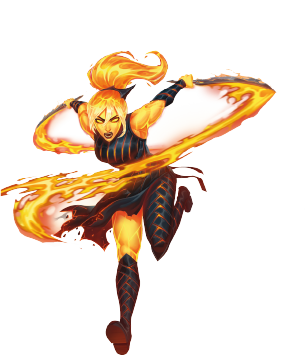
Each turn, you will roll and manipulate your resources, then strategically craft your deck from The Rift, a shared pool of unique spell cards – or choose to cast and burn a spell, immediately benefiting from a fraction of its full potential. When you’re ready, chain together spells from your hand into a single, devastating attack to disorient, disarm, and destroy your opponent. Every decision matters, and you will need to balance short-term gains against long-term strategy.
Do you have what it takes to outsmart your rival Riftblade and claim victory?
Setup
Step 1
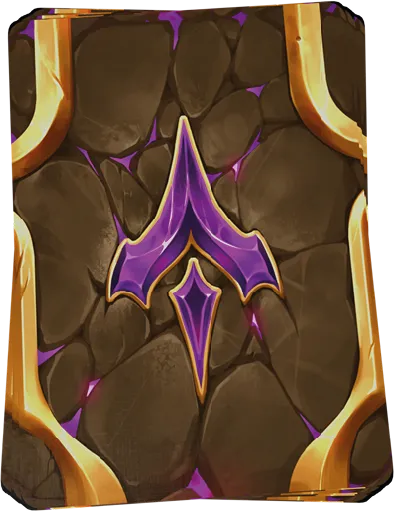
Players receive 2 copies of each of the following cards: Lunar Infusion, Cinderblast, Thunderclap, and Void Storm. Shuffle these together to form your starting deck and draw 4 cards.
Note: These cards do not display a Mana cost in the top-right corner.
Step 2
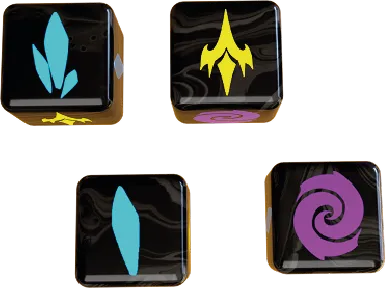
Players take 4 Riftstones (dice) and roll these to create their starting resources.
2 Players: the second player rolls 6 Riftstones instead. After the first turn, both players receive 6 Riftstones per turn.
Step 3
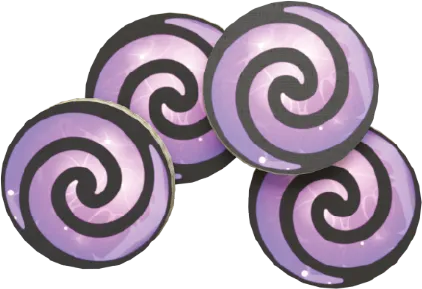
Set Mana tokens in a shared central pool within reach of all players.
Step 4
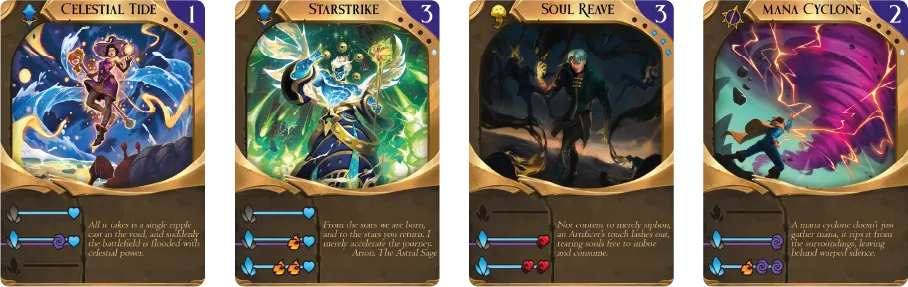
Shuffle all remaining (nonstarter) cards together to form the Rift. Draw 4 cards and place them face up in the center row.
Step 5
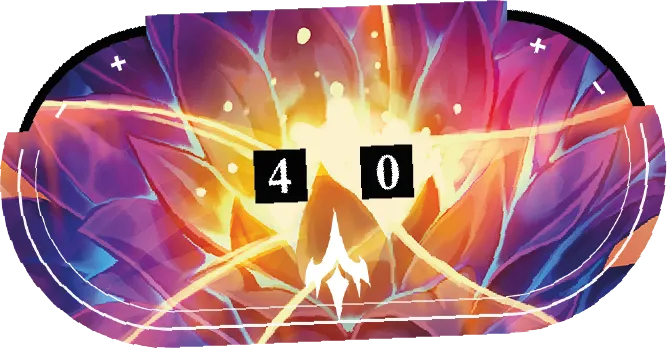
Players set their Health Dials to 40 Life.
Step 6
Randomly select a player to go first. Alternatively, roll your Riftstones, rerolling ties. The player with the highest Mana count goes first.
Anatomy of a Turn
Start of Turn
3-4 Player FFA only: At the beginning of your turn, select an opponent as your target. That player receives 2 additional Rfitstones (dice) and rolls them immediately for use on their turn. Note: You must target an opponent, even if you deal zero damage during a turn.
Attack Phase
On your turn, perform any of the following actions in any order, any number of times:
- Begin a Spell Chain: If you have not yet started a Spell Chain, play a card from your hand to begin one.
- Add a Spell: Add a card to your existing Spell Chain.
- Activate a Riftstone: Activate one of your Riftstones for its secondary effects.
- Purchase from the Rift: Purchase a card from the Rift using Mana.
- Trigger from the Rift: Trigger a card from the Rift using Mana.
If at any point you need to draw a card and have none remaining in your deck, shuffle your discard pile and place it face-down to form a new draw deck.
Clean Up Phase
- Discard & Redraw: If you have more than 7 cards, discard down to 7. If you have fewer than 7 cards, draw a maximum of 4 cards, stopping when your hand size hits 7.
- Reset Mana: Forfeit all unused Mana.
- Reroll Rifstones: Reroll all of your Riftstones.
- Refresh the Rift: Draw cards fromthe Rift deck to fill any empty slots, ensuring there is one face-up card in each of the 4 slots.
- Pass Turn: Play proceeds to the next player in clockwise order.
End of Game
If your Life reaches 0, you're out of the game. Play until only one player has Life Left — that player is the winner!
Creating a Spell Chain
Each turn, you have the opportunity to cast a single Spell Chain, weaving cards from your hand together for maximum effect. In order to play a card, you must be able to activate one set of effects from the card. This means cards with a Basic effect may be activated without Riftstones, but any card without Basic effects will require a suitable Riftstone (Empowering, Overcharging, or Wild) to play. When playing a card, select the Riftstone you will use to activate it, and gain the corresponding effect(s) on that card immediately.
Your first card may be of any Aspect, but each subsequent card must match at least one Aspect from the card immediately before it.
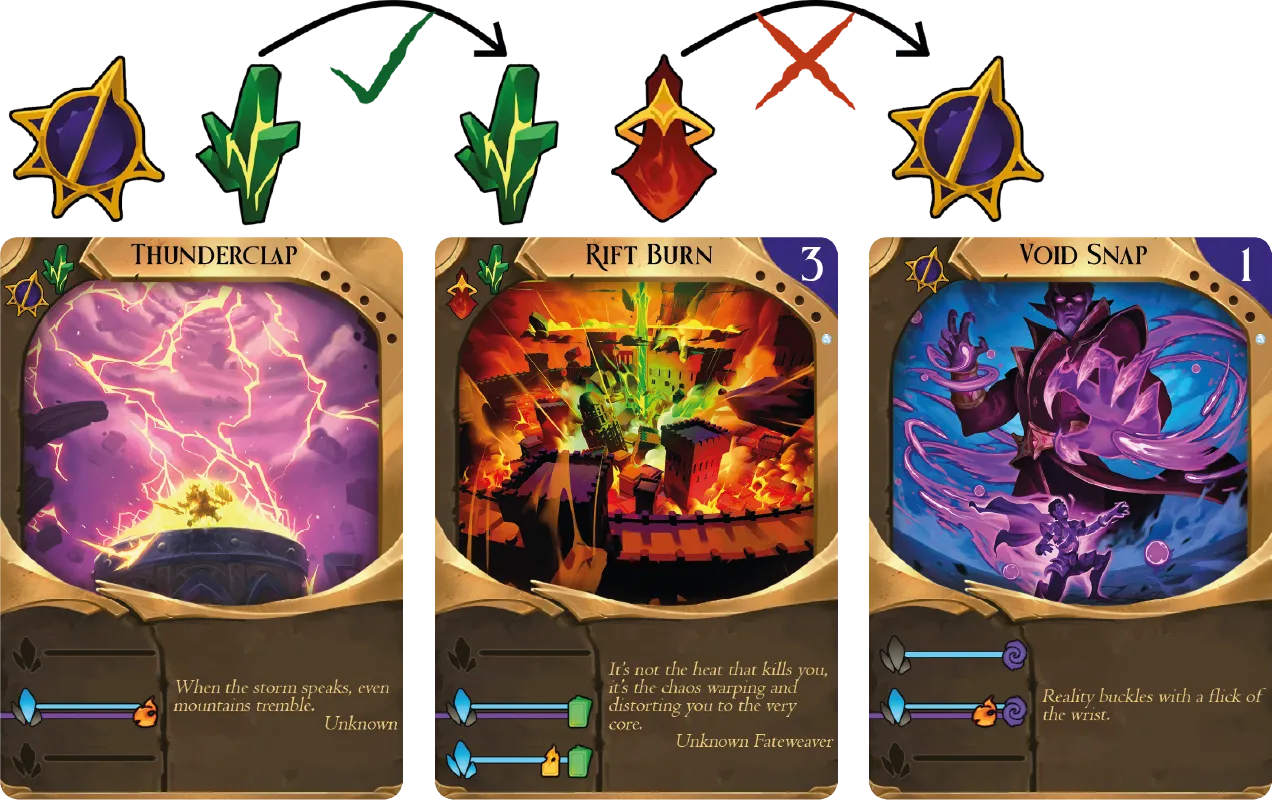
Thunderclap’s Chaos Aspect chains into Rift Burn’s Chaos. However, neither of Rift Burn’s Aspects match with Void Snap’s Void Aspect.
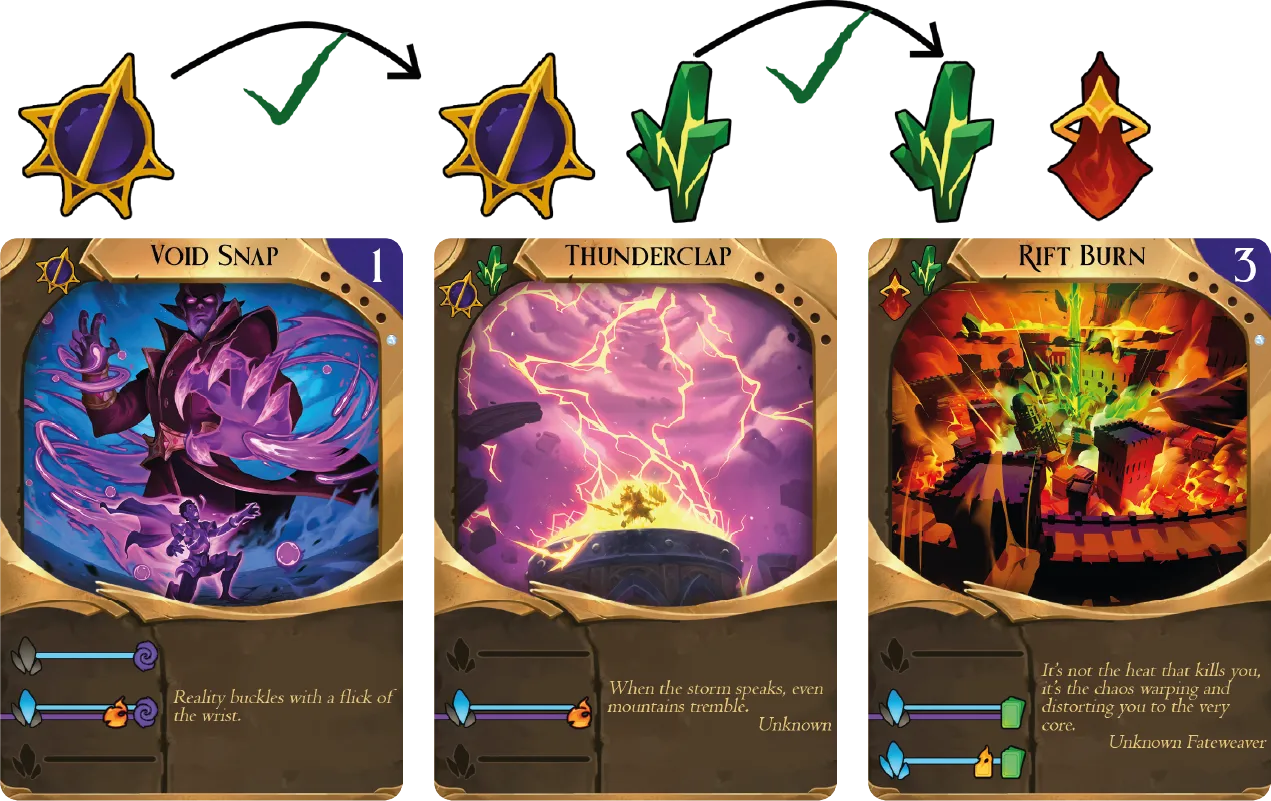
However, if we flip the order of Rift Burn and Thunderclap, then we can transition from Chaos/Infernal to Void/Chaos to Void Aspects, completing our chain.
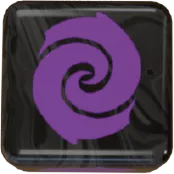
Primary: Gain 1 Mana
Secondary: Discard all cards in the Rift and draw 4 new cards
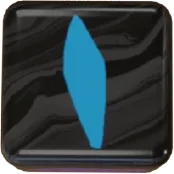
Primary: Overcharge a card
Secondary: Draw a card

Primary: Empower a card
Secondary: Discard a card, upgrading this die into a new Overcharging Riftstone
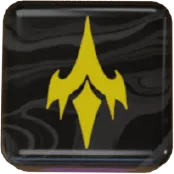
Primary: Use as a primary effect of any other Riftstone
Secondary: Trigger a card from your hand
Purchasing Cards from the Rift
Each card in The Rift may be purchased for its Mana cost and added to your discard pile. The Rift does not refresh until the end of the turn unless a Mana Riftstone is spent to refresh it. Mana gained from cards, or Wild Riftstones, may not be used to refresh The Rift.
Triggering Cards from the Rift and from Your Hand
Instead of purchasing a card, you may spend Mana to activate the card’s Trigger Line as a one-time effect. If Triggering from The Rift, pay the Mana cost, activate the effect(s), and immediately discard the card into The Void.
When Triggering a card from your hand, you do not need to pay the Mana cost again, simply activate the effect(s) and move the card into The Void. In either case, the Triggered card does NOT affect the current aspect(s) of your existing Spell Chain.
Spell Card Anatomy
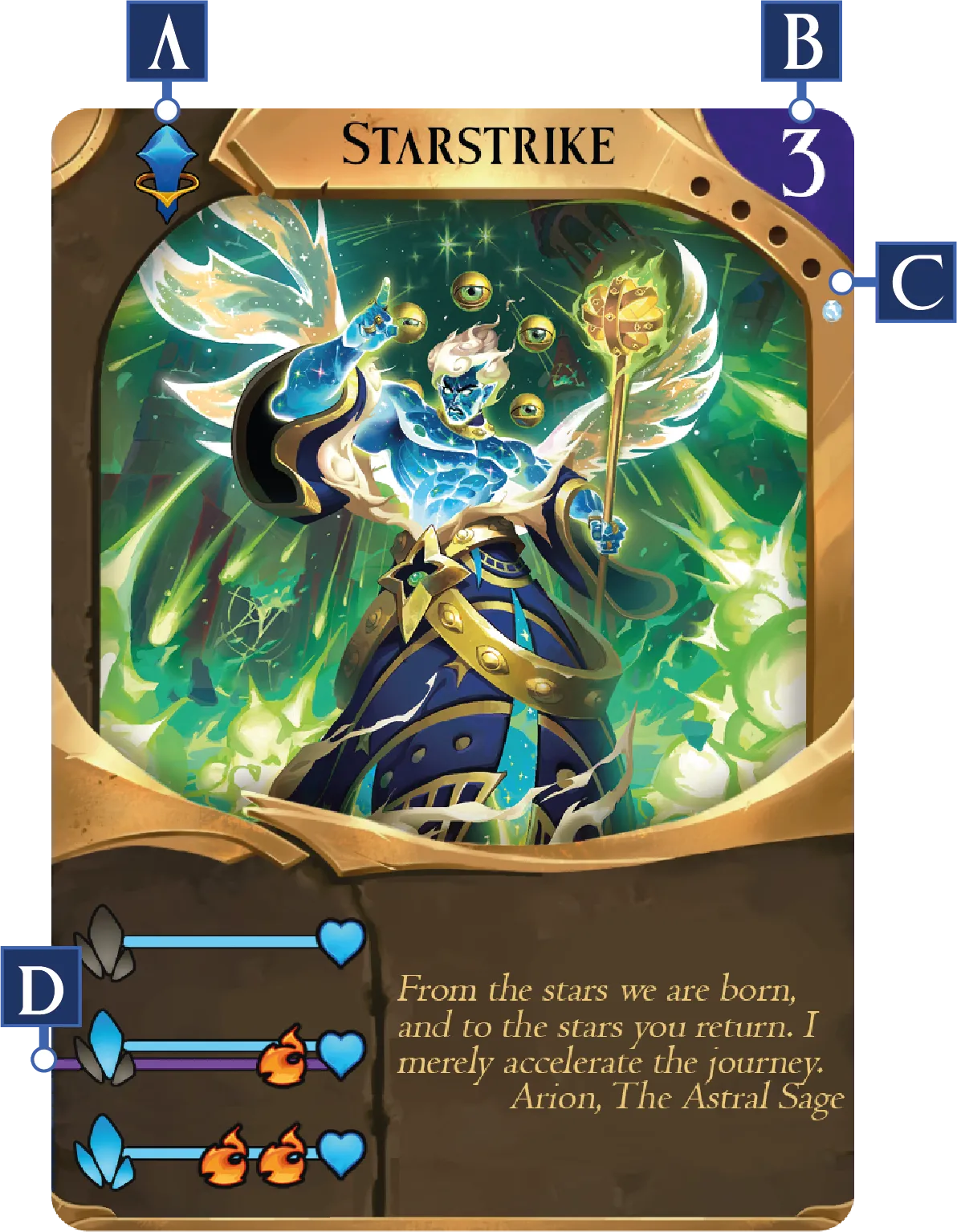
A: Aspect Cards must contain at least one common Aspect with the previous card in your chain in order to be played.
While you may find Void cards paired with Celestial, Infernal, Chaos, or Soul, every other Aspect only has two or three potential pairings — pay attention to maximize your synergies!
B: Mana Cost A card may be purchased or Triggered from The Rift by paying its Mana cost. Starting cards have no Mana cost associated with them and are easily identified by the lack of a Mana background.
C: Rarity A card’s rarity is a rough indication of how powerful it is compared to other cards of the same Mana cost.
Common cards have 1 pip and each set contains 4 copies. Uncommon cards have 2 pips and 2 copies. Rare cards are 3 pips with only a single copy.
D: Trigger Line When a card is triggered, activate the set of effects on the purple trigger line.
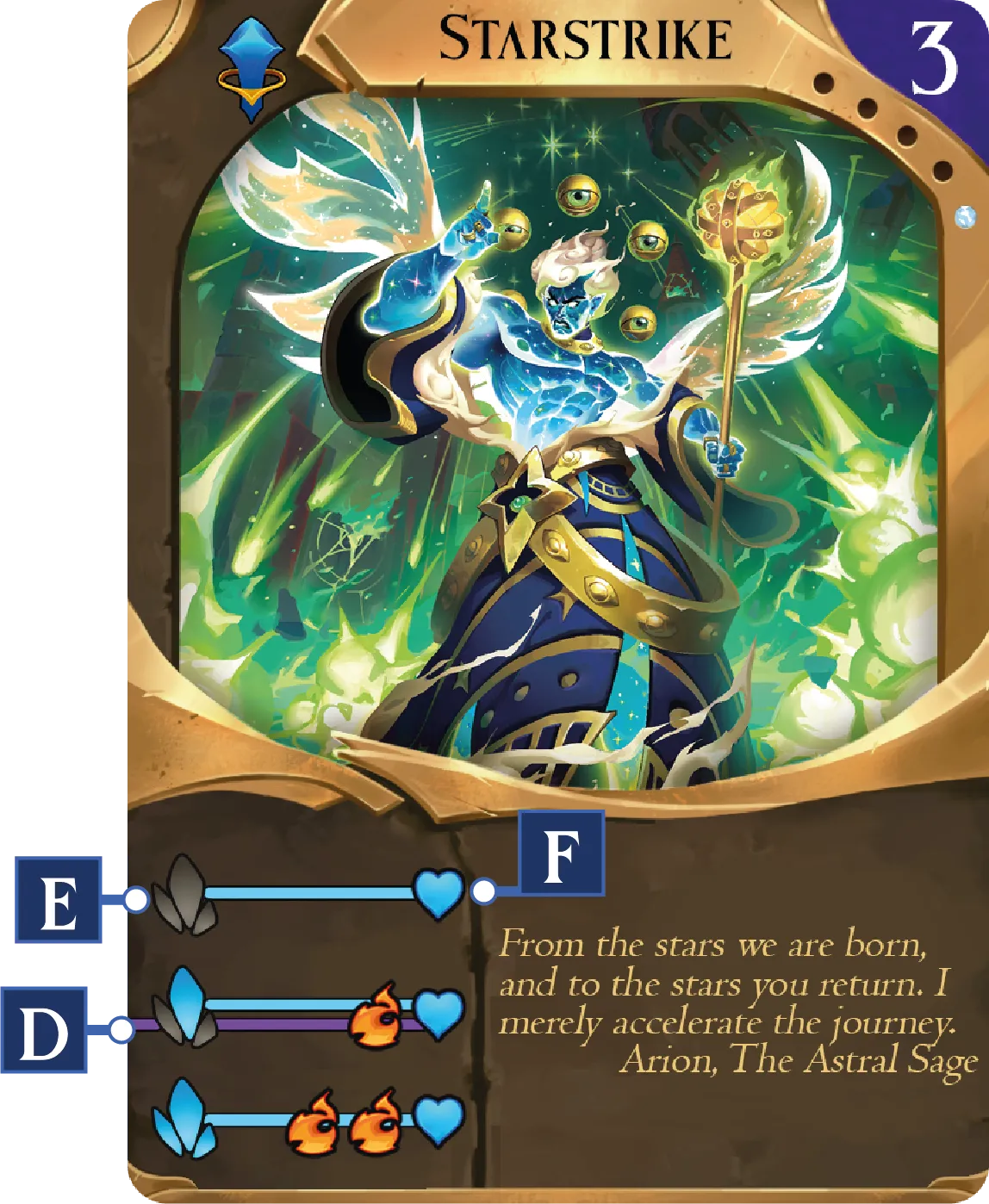
E: Riftstone Activations When playing a card, you must be able to activate at least one effect, usually by assigning a Riftstone. You may only activate a single set of effects on any given card.

Basic Effects may be activated without paying a Riftstone

Empowered Effects require an Empowering, Overcharging, or Wild Riftstone to activate.

Overcharged Effects require an Overcharging or Wild Riftstone to activate.
F: Effects Every time you activate a spell, you immediately gain its effects. The base game consists of six core effects:

Attack
Deal 1 Damage

Heal
Heal 1 Life
Draw
Draw 1 Card

Mana
Gain 1 Mana

Siphon
Deal 1 Damage, Gain 1 Life

Burn
Deal 1 Damage, Opponent Chooses & Discards a Card

Forge an alliance and face your rivals in the ultiamte test of teamwork. In the 2v2 mode, individual skill is not enough; you must anticipate your partner's moves and combine your strengths to unleash devastating combos that are impossible to achieve alone. This mode introduces a few simple rule changes but gives rise to a uniquely complex and rewarding game.
In this mode, players share a health dial, set to 40 Life, but maintain their own dice pool of 4 dice each. Players no longer gain dice for being attacked.
Each turn, you and your teammate will choose which of you will go first; that player will begin the spell chain. That player's partner will then play a card with a matching Aspect. Play goes back and forth until one playe rpasses, at which mpoint their teammate may continue playing cards. Mana may be spent to acquire or to Trigger cards in any order, at any point, by either player, including after a player has passed play.
Enemies surround you, eager for the vital Riftstones your attack will provide while they hope to endure the torrent of your assault. In Riftblade's Free For All, alliances are temporary and vengeance is overwhelming; take care on whom you target because they get stronger with every blow they absorb. This mode builds on the base ruleset for Riftblade, but the introduction of a third or fourth player creates a constantly shifting balance of Riftstones that will keep everyone on their toes.
In this mode players each start with 40 Life and 4 Riftstones. At the beginning of a player's turn, that player must select an opponent to target, regardless of their other actions. The targeted player then immediately gains and rolls 2 new Riftstones.
At the end of a player's turn, during the Clean Up Phase, players reduce their Riftstone count back down to 4, and then reroll their Riftstones. All other rules remain unchanged and victory goes to the last Riftblade standing.